These case studies showcase real-world examples of how collaboration across sectors is driving impactful, sustainable solutions—breaking down silos, empowering communities and creating lasting change.
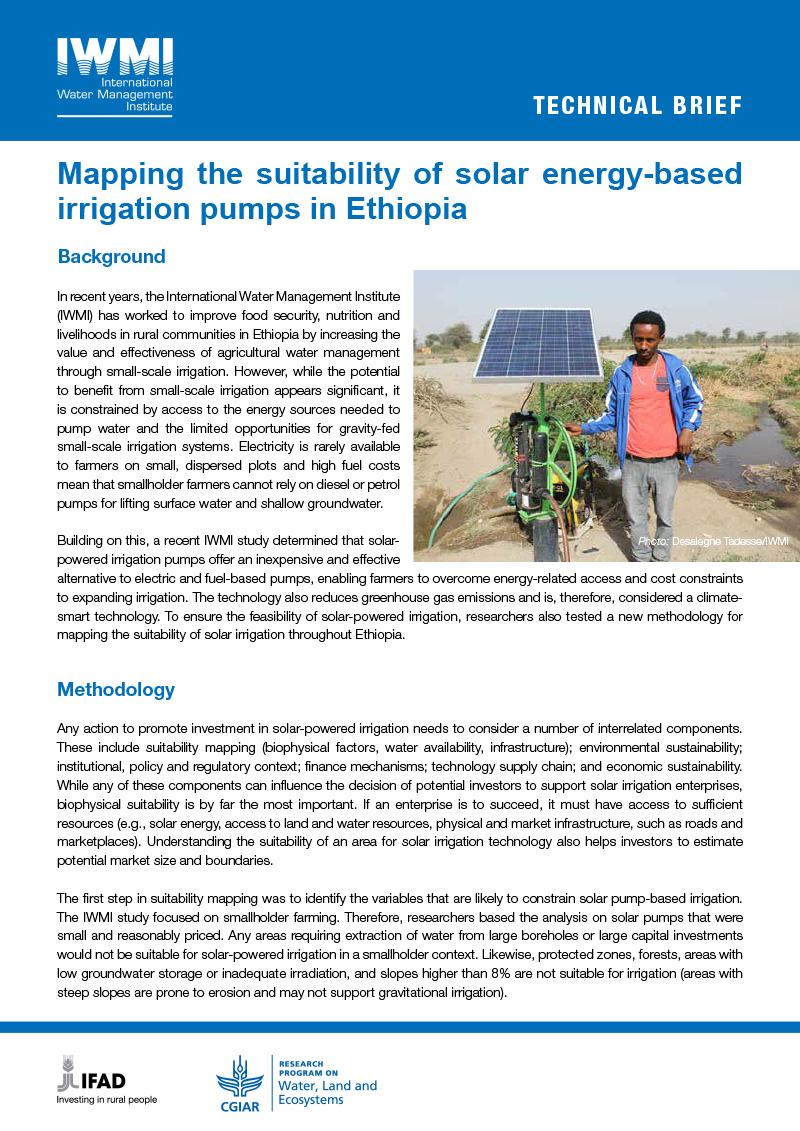
Despite the clear benefits of small-scale irrigation, the technology’s expansion in Africa faces significant energy-related barriers. For example, smallholder farmers often struggle to access reliable and affordable energy sources for water pumping. Many are disconnected from electricity grids due to the dispersed nature of their plots, while the high cost of diesel and petrol makes fuel-powered pumps financially unsustainable. Additionally, the availability of gravity-fed irrigation systems is limited, further constraining irrigation options. These challenges hinder farmers’ ability to boost agricultural productivity and build climate resilience.
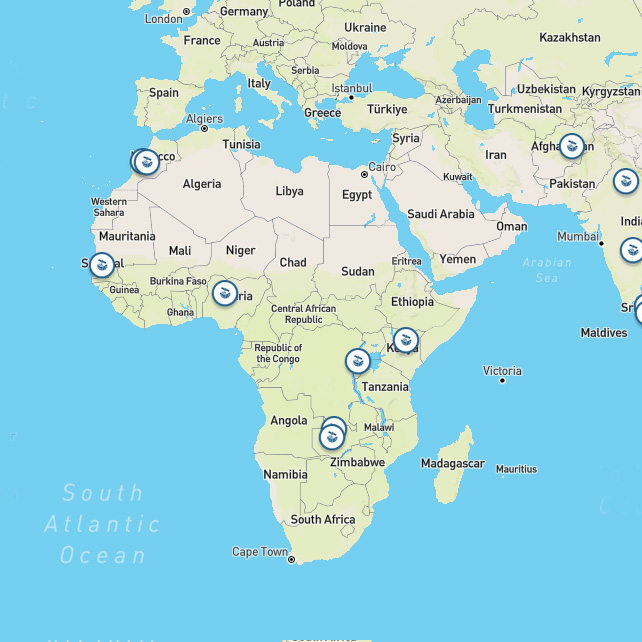
The interactive mapping tool continues to play a critical role in scaling up sustainable solar irrigation, empowering farmers and strengthening food and water security across Ethiopia and other African countries. With researchers, non-governmental organizations, policy makers, development agencies and the private sector working together on using these maps to enable access to reliable and cost-effective water pumping, millions of farmers can significantly increase their agricultural productivity and incomes. The data-driven insights provided through mapping also guide investment and implementation, ensuring that solar irrigation reaches the areas where it can have the greatest impact.
The success of SADMS is rooted in strong partnerships. In southern Indian states, real-time drought severity data—acquired through collaboration between government agencies, researchers, and technology partners—has been instrumental in shaping contingency plans. Farmers in areas receiving SADMS data have reported significantly higher crop yields and incomes compared to those without access to such insights.
Recognizing its effectiveness, SADMS has been scaled up in other countries across Asia and Africa. In India, the government is working with research institutions to integrate satellite data with ground-based measurements, leading to improved response strategies across three districts and the development of 620 district-level drought plans.
In Sri Lanka, IWMI and the World Food Programme have partnered to incorporate SADMS bulletins into national food security strategies, strengthening drought preparedness and safeguarding agricultural production. These collective efforts are ensuring that drought response is proactive, data-driven and impactful.
More than one billion people in South Asia depend on agriculture for their livelihoods, with many vulnerable to the devastating effects of drought. As droughts become more frequent and severe—partly due to shifting climate patterns—governments, development agencies, and research institutions must work together to strengthen response efforts. This includes providing faster, more precise relief measures such as emergency food supplies, financial assistance, and policy interventions.
However, for national and local authorities to take coordinated and effective action, they need accurate, real-time data on the extent and severity of drought impacts. Without collective efforts to generate and share this information, response strategies risk being slow and ineffective.
To address this challenge, the South Asia Drought Monitoring System (SADMS) delivers crucial data as part of a broader initiative by the CGIAR Research Program on Water, Land and Ecosystems (WLE) to enhance agricultural resilience. This work is made possible through collaboration between the International Water Management Institute (IWMI), governments, international organizations and local institutions.
By leveraging satellite imagery and sophisticated modelling, SADMS provides early warnings, vulnerability assessments, and actionable drought-response plans. These data-driven insights empower national and local authorities and farming communities to take timely action, strengthen resilience and protect livelihoods from the far-reaching impacts of drought.
The success of SADMS is rooted in strong partnerships. In southern Indian states, real-time drought severity data—acquired through collaboration between government agencies, researchers, and technology partners—has been instrumental in shaping contingency plans. Farmers in areas receiving SADMS data have reported significantly higher crop yields and incomes compared to those without access to such insights.
Recognizing its effectiveness, SADMS has been scaled up in other countries across Asia and Africa. In India, the government is working with research institutions to integrate satellite data with ground-based measurements, leading to improved response strategies across three districts and the development of 620 district-level drought plans.
In Sri Lanka, IWMI and the World Food Programme have partnered to incorporate SADMS bulletins into national food security strategies, strengthening drought preparedness and safeguarding agricultural production. These collective efforts are ensuring that drought response is proactive, data-driven and impactful.